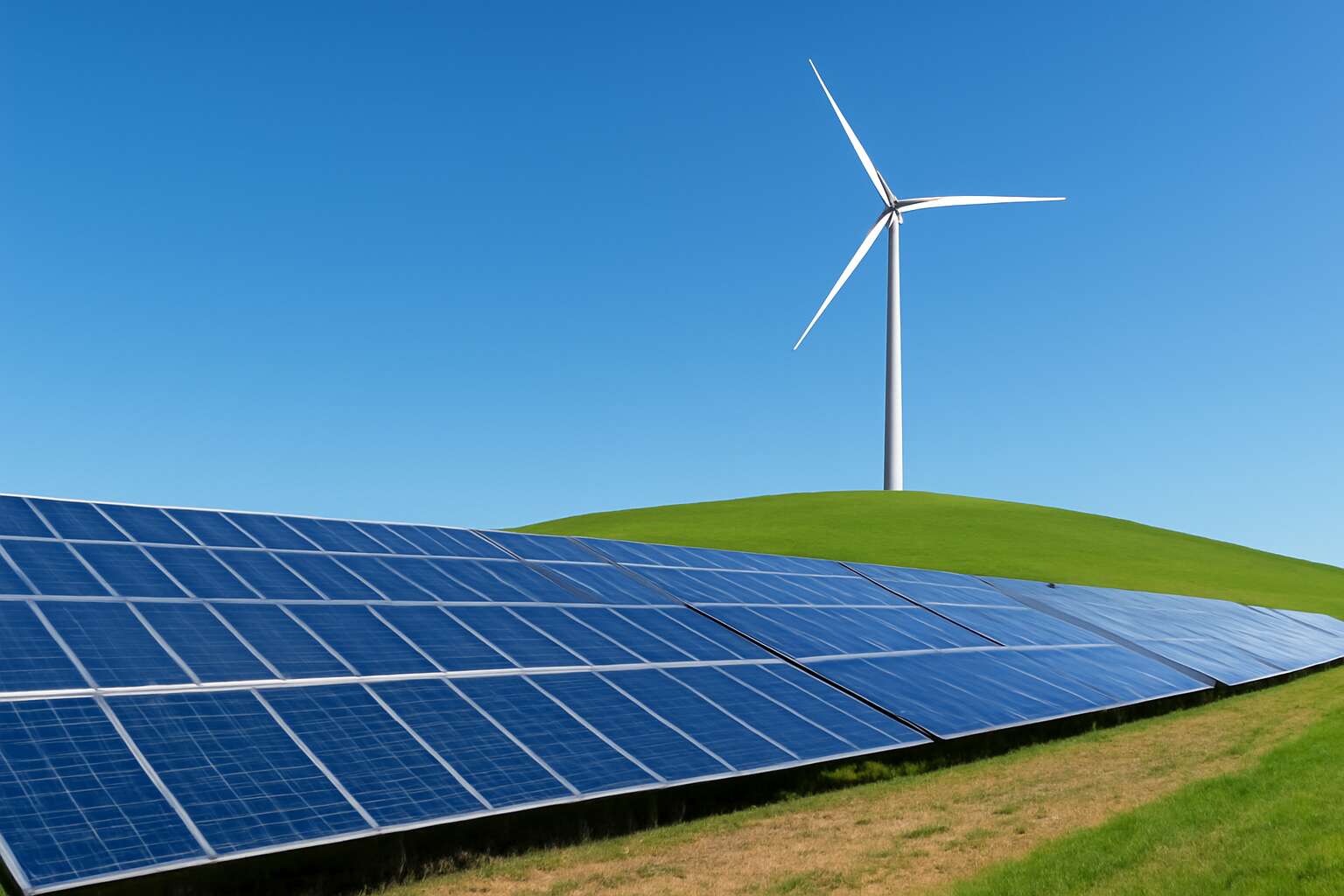
Hybrid solar and wind systems: overview and core concepts
What is a solar-wind hybrid system?
Power in harmony. In South Africa, the blend of abundant sun and dependable wind can turn an unpredictable climate into a steadier green grid. A solar-wind hybrid system stands at the fulcrum of that balance—a setup that unites solar PV with a wind turbine under smart controls to smooth output and reduce gaps. The result is resilience that fights outages and lowers energy bills, a quiet revolution in every rooftop and rural generator shed.
Key concepts include:
- Resource complementarity: daytime sun, windy evenings.
- Storage and smart dispatch: batteries and controls align supply with demand.
- Grid compatibility: smoother ramping and faster response to outages.
In South Africa’s landscape, such systems—often described in industry materials as solar with wind turbine setups—offer a practical path to energy security and lower costs.
Key components and how they work together
The cost of renewables has fallen dramatically—often by more than 70% in the last decade—yet reliability remains the prize. In South Africa, this solar with wind turbine setup blends solar panels with a wind turbine under smart controls to smooth output and boost reliability.
Key components include solar panels, a wind turbine, a shared battery bank, a hybrid inverter, and a smart controller. These parts work together to harvest energy when available, store excess, and dispatch power to meet demand while staying grid friendly.
- Solar and wind inputs feed a common inverter and storage system
- Battery storage balances daily fluctuations for night and calm periods
- Smart controls coordinate charging, discharging, and grid interaction
The result is a resilient upgrade for rooftops and rural sheds, turning variable weather into steadier power and lower bills through intelligent energy management.
Hybrid vs standalone solar or wind: when to choose
South Africa basks in roughly 2,500 hours of sunshine each year, a beacon for a resilient energy future. A hybrid solar and wind approach—solar with wind turbine configurations—transforms capricious weather into a steady current, a duet that honors sunlit abundance and coastal breeze.
- Remote or off-grid sites needing consistent supply
- Sites with strong sun and wind profiles for balanced generation
- Storage targets and lifecycle costs that favor diversified input
With thoughtful sizing and intelligent control, a hybrid system transforms variable weather into a dependable energy companion, elevating resilience across rooftops and rural outposts.
Grid-tied vs off-grid hybrid configurations
South Africa basks in roughly 2,500 hours of sunshine each year, a sun-soaked jackpot for resilient energy. A solar with wind turbine pairing turns capricious weather into a steady heartbeat, a duet that respects sunlit abundance and coastal breeze.
Core concepts: PV and wind work together, backed by storage and smart controls that smooth fluctuations rather than chase every gust. The result is a source that can be grid-tied or standalone, depending on where you sit on the map and how you connect to the grid.
- Grid-tied hybrid: feeds excess to the public grid and draws from it on demand
- Off-grid hybrid: a self-contained system with batteries and, if needed, a backup generator
- Hybrid with intelligent control: coordinated charging and discharging to extend storage life
Reliability, redundancy, and performance considerations
South Africa basks in roughly 2,500 hours of sunshine each year, a sun-soaked jackpot for resilient energy. A solar with wind turbine pairing turns capricious weather into a steady heartbeat—a duet that respects sunlit abundance and coastal breeze. This hybrid adapts to grid-tied or standalone setups, depending on where you sit on the map and how you connect to the grid!
- Smart charging and discharging to extend storage life
- Redundant paths and diagnostics to survive outages
- Coordinated PV and wind operation for rapid response
Reliability, redundancy, and performance considerations hinge on storage sizing, inverter coordination, and intelligent control. Storage depth, battery health, and cooling matter as much as the panels and rotors themselves. The goal is to smooth output, not chase every gust.
Efficiency and performance optimization for hybrid configurations
Site assessment and resource characterization for maximize yield
Power rarely sleeps in the South African sky. A solar with wind turbine pairing dances between sunlit hours and gusty afternoons, turning fickle resources into reliable generation. This duet isn’t magic—it’s optimization: align hardware, controls, and weather data to squeeze every watt from both sources. The payoff isn’t just more energy; it’s resilience that steadies the grid and bottom line.
Efficiency and performance optimization for hybrid configurations hinge on precise site assessment and resource characterization. By mapping wind speeds across the year, solar irradiance patterns, temperature ranges, and local shading, we size the turbines and PV arrays to match a site’s rhythm. Predictive models and real-time monitoring keep the system in tune.
- Wind profiling and local meteorology.
- Solar resource assessment and shading analysis.
- Integrated controls and equipment sizing for harmony.
With South Africa’s varied landscapes, this disciplined approach prevents curtailment and unlocks sustained performance when sun fades and breeze shifts.
Hybrid inverter and storage integration for grid stability
In South Africa’s generous climate, grid operators report that a well-tuned solar with wind turbine pairing can cut daytime curtailment by up to 25%, delivering steadier power when sun and breeze fail to align. The trick isn’t luck; it’s orchestration—coordinated hardware and refined controls.
- Inverter coordination for ramp-rate control
- Storage sizing and state-of-charge optimization
- Advanced control software for frequency and voltage support
Hybrid inverter and storage integration are the quiet maestros, smoothing the tempo and offering true grid stability. By pairing fast-acting inverters with capable storage, dispatch becomes a ballet of watts, not a gasp in the dark. The right setup blends PV, wind, and batteries into a single, reliable chorus.
South Africa’s varied landscapes reward such discipline; when sun fades and breeze shifts, the hybrid system keeps the lights bright and the economy humming.
Wind resource assessment and solar irradiance alignment
South Africa’s climate is a gift and a puzzle. Industry data show up to 25% fewer daytime curtailments with the right mix. A well-designed hybrid can keep lights on when sun and wind don’t cooperate. Efficiency is less luck and more orchestration, a measured approach to performance!
Efficiency relies on wind resource assessment and solar irradiance alignment. Mapping wind gusts, seasonal sun angles, and cloud patterns feeds predictive controls that smooth output. A solar with wind turbine pairing benefits from synchronized forecasting and ramp-rate aware dispatch, with fast-responding inverters and tuned storage forming the backbone.
- Wind resource mapping and site siting considerations
- Irradiance forecasting and PV tilt optimization
- Dispatch orchestration with storage state-of-charge management
Control strategies for load balancing and energy dispatch
Efficiency in a hybrid isn’t luck; it’s choreography. In South Africa’s sun-drenched mornings and wind-sculpted afternoons, smart control trims waste and keeps lights steady. Industry data hint that a balanced mix can shave daytime curtailment by as much as 25%, turning variability from foe to ally. When wind and solar stay in step, the grid breathes easier—and we sleep a little better!
Control strategies for load balancing and energy dispatch hinge on forecasting, ramp behavior, and storage discipline. A well-tuned solar with wind turbine pairing uses synchronized forecasts and dispatch that respect ramp rates, while fast-responding inverters and storage state-of-charge management act as the metronome.
- Real-time load balancing driven by combined solar and wind forecasts
- Dispatch scheduling that respects ramp rates and grid constraints
- State-of-charge management to smooth energy delivery and preserve storage health
Maintenance, monitoring, and data analytics for performance
Efficiency in a hybrid isn’t luck—it’s choreography. In South Africa’s sunlit mornings and wind-sculpted afternoons, maintenance, monitoring, and data analytics turn potential waste into dependable performance for solar with wind turbine configurations. Predictive maintenance listens for the heartbeat of equipment, spotting hints of wear before they disrupt harmony. Real-time monitoring dashboards translate gusts and irradiance into actionable insights, reducing idle cycles and sharpening response.
Consider these facets of optimization:
- Real-time condition monitoring and anomaly detection
- Predictive maintenance analytics that extend component life
- Performance dashboards for cross-plant visibility
This living system, data governance and cyber-resilience ensure the numbers remain trustworthy, safeguarding storage health and grid responsiveness. The result is a resilient, melodious hybrid that keeps lights steady through changing skies.
Cost, financing, and ROI of hybrid solar wind projects
Capital costs, equipment options, and installation considerations
South Africa’s energy landscape is unforgiving and opportunistic: a solar with wind turbine hybrid can lock in more predictable bills even as fuel costs swing. The true economics live in capacity factors, long-term maintenance, and depreciation that offset up-front capital.
- Capital costs and lifecycle depreciation tailored to local tax regimes
- Equipment options including turbine sizes, PV configurations, and hybrid inverters
- Installation considerations such as land readiness, grid interconnection, permitting, and access for maintenance
Financing in South Africa often blends PPAs, green loans, and vendor arrangements, with bankable models supported by Eskom-related policy signals. ROI depends on capacity factor, tariff synergies, and resilience against outages; viewed through that lens, the hybrid can offer compelling payback timelines in the right location.
Financing models, incentives, and subsidies
South Africa’s power landscape can feel like a social ballet—unpredictable, yes, but rich with opportunity. A solar with wind turbine hybrid locks in more predictable bills by tying economics to long-run capacity factors and disciplined maintenance. Capital costs and lifecycle depreciation, aligned with local tax regimes, often determine the difference between a dream and a durable asset.
Financing in the SA market blends PPA structures, green loans, and vendor arrangements, with bankable models supported by Eskom-related policy signals. Incentives and subsidies—where they exist—accelerate deployment and improve the overall yield.
- PPA-heavy structures that monetize predictable cash flows
- Green loan facilities and vendor finance options aligned to project milestones
ROI depends on capacity factor, tariff synergies, and resilience against outages. Viewed through that lens, solar with wind turbine systems can deliver compelling payback timelines in the right location, with depreciation and maintenance spanning the asset’s life.
Lifecycle cost analysis and ROI timelines
“Predictability is a currency,” says a South African energy strategist, as outages and price spikes tighten the margin on every project. In this climate, a solar with wind turbine hybrid becomes less speculative and more a disciplined budget anchor.
Lifecycle cost analysis weighs capital expenditure, operating costs, financing charges, and end-of-life considerations. For a hybrid asset, depreciation regimes, maintenance cycles, and interconnection fees often decide if the asset pays back within the planned horizon.
- Capital expenditure versus ongoing operating costs
- Financing terms and interest impact
- Scheduled maintenance and component replacement
- Tax depreciation and regulatory incentives
ROI timelines hinge on capacity factor, tariff synergies, and resilience against outages. When site conditions align, this hybrid configuration offers clearer payback windows, with depreciation and upkeep spanning the asset’s life.
Sensitivity analysis: energy price scenarios and risk factors
Cost wise, a solar with wind turbine hybrid stacks capital outlay against long-term savings, not wishful thinking. In South Africa, capex debates hinge on equipment mix, site conditions, and the never-sleeping O&M bill. When outages bite, predictable, fuel-free generation becomes a budget anchor.
Financing terms and interest impact the curve from day one. Depreciation regimes and regulatory incentives can accelerate payback, while maintenance and interconnection fees quietly trim the margin. A disciplined approach—balanced leverage with contingency—keeps cashflow in view.
ROI hinges on capacity factor, tariff synergies, and resilience against outages. When price scenarios tilt higher, the hybrid tends to preserve value; when they soften, depreciation and upkeep still support a steadier horizon.
- Energy price volatility and tariff shocks
- Regulatory changes affecting incentives
- Currency risk and import cost fluctuations
- Interconnection delays and grid constraints
Applications and case studies of hybrid solar and wind installations
Residential and remote-area micro-hybrids
From wind-swept plains to sun-drenched farms, the blend of solar with wind turbine systems is quietly rewriting off-grid certainty. South Africa averages about 2,500 hours of sunshine a year, and this solar with wind turbine pairing powers residential and remote-area micro-hybrids, adding resilience where the grid shivers.
- Rural homesteads powered by hybrid systems for lighting, refrigeration, and charging.
- Remote lodges and clinics in the Karoo maintaining operations through variable weather.
- Off-grid farms and mining outposts cutting diesel use with hybrid energy.
These applications illustrate how hybrid designs unlock energy independence while keeping reliability steady through nightfall and gusts.
Commercial and industrial hybrid deployments
South Africa averages about 2,500 hours of sunshine a year, and for commercial sites that translates into reliable, renewable uptime when paired with wind. The hybrid approach—solar with wind turbine—powers operations that crave steadiness as grids blink and prices rise.
Across South Africa’s commercial landscape, hybrid pilots span manufacturing campuses, agricultural estates, hospitality complexes, and mining outposts, all chasing resilient power without diesel creep. The following snapshots illustrate real-world deployments that balance wind and sun for uninterrupted throughput:
- Manufacturing campuses seeking uptime and lower fuel costs
- Agricultural estates optimizing irrigation and cold storage
- Hospitality complexes aiming for guest comfort and reliability
- Mining operations reducing diesel burn while meeting safety load profiles
These applications reveal how hybrid systems unlock energy independence while keeping reliability steady through nightfall and gusts, proof that the future of off-grid commercial resilience is quietly practical rather than poetic.
Remote communities and microgrid applications
Remote communities in South Africa are discovering that reliability doesn’t hinge on a single fuel. In pilots, a solar with wind turbine pairing delivers daytime generation alongside steady evening demand, slashing diesel burn and keeping clinics, schools, and water pumps humming!
Examples across the microgrid landscape include:
- Coastal village microgrids powering clinics and refrigeration
- Rural mining camps stabilizing safety load profiles
- Agricultural hubs sustaining irrigation and cold storage
These deployments reveal how hybrid energy systems unlock energy independence while maintaining resilience through gusts and nightfall, quietly redefining remote power in South Africa.
Industrial-scale projects: lessons learned and best practices
Industrial-scale deployments of solar with wind turbine systems reveal resilience as a daily discipline: sun-drenched hours feed the PV array while gusts keep the rotors turning, smoothing demand peaks and cutting diesel dependence. In South Africa’s mining camps, coastal processing facilities, and sprawling industrial estates, hybrid plants translate ambition into dependable power, even when weather throws a curveball. The principle is crisp: align resource profiles, scale intelligently, and design for modularity so growth never stalls!
- Resource forecasting accuracy to match load shape across seasons.
- Modular storage and dispatch strategies that grow with demand.
- Standardized interfaces enabling rapid integration, maintenance, and upgrades.
These patterns guide industrial hybrids toward uptime and predictable performance in South Africa’s energy markets.

0 Comments